Beefs, gripes, quibbles

Nothing meaty here, simply a bit of a lament and couple of questions or quibbles—which sound like a grain, as in a bowl of rice and quibble or how about a tomato, feta and quibble salad?

My first question or quibble is why are almond croissants so often over-baked? OK, not the kind of question to keep one awake at night, but still … a question I’d like answered. Someone recently told me it’s because most almond croissants are made from yesterday’s pastries, or the day before yesterday’s. The old croissants are split open, filling spread inside, flaked almond scattered on top and then into the oven they go for a second baking. If that’s true—and I don’t know if it is—no wonder they’re so often hard and dry. And BTW a heavy dusting of icing sugar is more giveaway than disguise.

Now for the lament. I don’t know if this is an Australian thing or a uniquely Sydney thing, but it’s really hard to find a café open past 3:00 pm. I want to meet a friend or colleague late afternoon but in my local suburb the cafés have all shut up shop for the day. And if’s not much better in the CBD. A handful say they’re open until 5:00 pm—which means from 4 o’clock the staff are clearing up, putting chairs on tables, mopping floors. Low-key-challenging customers to keep sitting there until the advertised closing time. Look, I get it, staff have probably been there since early morning; they want to go home and get on with their own lives.

But still …

Such experiences—who wants to sip an iced coffee while a waiter sprays cleaning fluids around you?—invariably get me thinking of London where cafés stay open evenings. Sure, a lot of them are chains like Costa, Pret a Manger and Caffè Nero, but they’re open, trade is usually pretty brisk, and although I’m not generally a fan of chains, I’m starting to wish we had them in Sydney.

Don’t want to end on that rather sour note, so here’s a photo of my sweet and delicious tomato and mushroom biryani. It’s a Rukmini Iyer (India Express: Fresh and Delicious Recipes for Every Day) recipe with a couple of tweaks.

Katherine Mansfield’s tomato soup

Tomato soup took me to Katherine Mansfield’s Bliss. The story chronicles a day in the life of Bertha Young as she prepares for, and hosts, a dinner party. Among the invited guests is Berth’s new ‘find’, the sleek and silvery Miss Fulton.

‘What was there in the touch of that cool arm that could fan—start blazing—the fire of bliss that Bertha did not know what to do with?
   Miss Fulton did not look at her … But Bertha knew, suddenly, as if the longest, most intimate look had passed between them—as if they had said to each other: “You too?”—that Pearl Fulton, stirring the beautiful red soup in the grey plate, was feeling just what she was feeling.’

Food permeates Katherine Mansfield’s writing. It’s everywhere—in her notebooks, in her correspondence and in her published prose. If you’re looking for some literary nourishment, there’s a gloriously detailed essay Eating and Reading with Katherine Mansfield by Aimée Gasston that was published earlier this year in the ever wonderful Public Domain Review.

Later in the story, another guest, an up-and-coming poet, wants to show Bertha a verse that opens with the line: Why Must it Always be Tomato Soup?

There are many kinds of hunger. While Bertha watches her husband and Miss Fulton—the woman she’s flirted with all evening—arrange a secret assignation, the poet continues:

‘Why Must it Always be Tomato Soup? It’s so deeply true, don’t you feel? Tomato soup is so dreadfully eternal.’

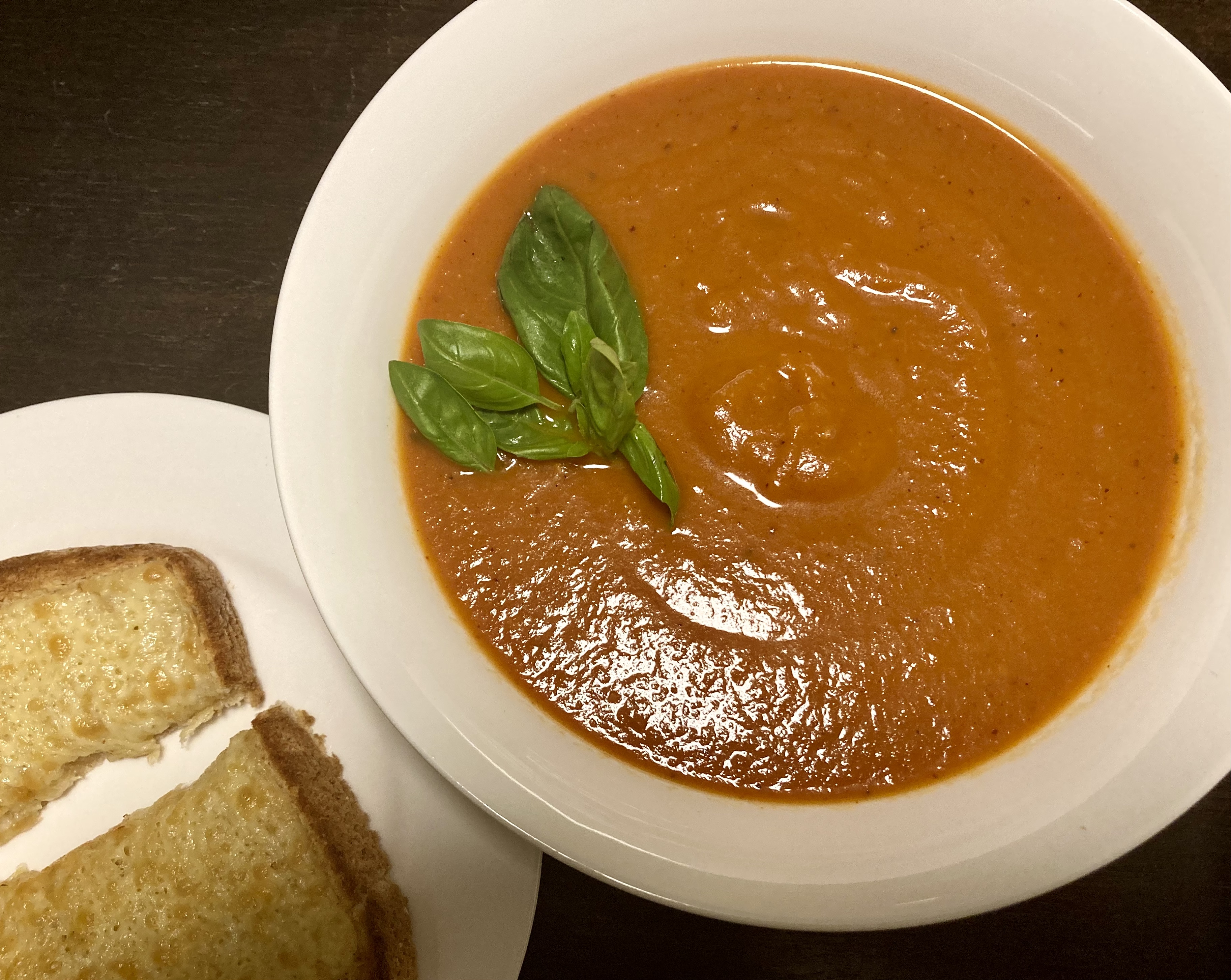
I don’t know about eternal but tomato soup is one of my standby dishes. Lots of fragrant fresh tomatoes, a small carrot, an onion, a stick of celery, a clove or two of garlic and a red capsicum. Spice and/or herb to taste. Perfect for a winter supper with grilled cheese on toast.

Moving on

My question here is not why must it always be tomato soup, but why is soup of the day always pumpkin?

The basic cheese sandwich

I was going to do a riff on parsley and why it’s a bit crap at the moment. Should probably start growing it myself in pots on my balcony, but until then I have to buy it, and the continental parsley I’ve had recently has leaves that are coarse to the point of toughness and is pretty tasteless. I’ve moved to the curly variety to see if that’s any better. But more research is needed … so I’ve gone to another current preoccupation: the basic cheese sandwich.

I work mostly from home and a cheese sandwich is my go-to lunch. Sometimes toasted with mushrooms or fried onions; sometimes with added tomato; sometimes grilled over sauerkraut and mustard—a quick, vegetarian Reuben. Often plain. The cheese varies, as does the type of bread, but one thing never varies—I don’t eat lunch at my desk. Drinks, yes—tea, coffee, water, occasionally a glass of wine at the end of the working day or over a Zoom chat with friends. But no food.

The basic cheese sandwich. It’s one the the ways I evaluate a hotel’s service: will they make me a plain cheese sandwich? Not a club sandwich, not one of those huge multi-ingredient things on the menu. Just bread—white, rye or wholemeal—butter and cheese. Sometimes I get lucky, but more often than not, I’m told that a plain cheese sandwich is not an option.

Years ago, carrying out film research in India. Long, dusty, slow-moving car trips were common, and we’d ask the hotel where we were staying to provide bananas and plain cheese sandwiches for the journey. And they did, perfect squares—occasionally triangles—wrapped in greaseproof paper and secured with string. We’d share them with the driver and fixer while we sat in traffic jams and discussed cricket or international politics. Now, whenever a hotel tells me that a simple cheese sandwich is not something their kitchen can provide, I remember those road trip sandwiches and the easy can-do-ness of that Indian hotel.

Gingerbread—why are they always men?

In a church hall transformed for the weekend into a café we ate open sandwiches on dark rye bread and shared wedges of princess cake.

I’ve recently returned from a month in London and Edinburgh. A trip originally planned for 2020 but cancelled because of  Covid. So happy to be travelling again. Part of the visit was work-related, and in Scotland my research had a definite culinary focus. Looking into, amongst other things, the provenance of a soup called Cullen skink. Back in London, my friend Jane invited us to the Swedish Christmas Fair in Marylebone. So there we were and there was that princess cake, a light-as-air sponge under a layer of pale green marzipan. Why green? The colour reminded Jane of a children’s story: The Marzipan Man. He was green, she said.

Marzipan men, gingerbread men … why are they always male? Look at their anatomy and they can be any gender. In fact, I like to think there’s something just a little a bit queer about gingerbread men. Is it worth noting that in Cockney rhyming slang ‘ginger beer’ means queer?

Gingerbreads’ origin stories are somewhat opaque, but recipes appear in early medieval cookery manuscripts. English gingerbread began its life as a paste which was used as a medical remedy, later moving to a concoction of breadcrumbs and honey. The Penguin Companion to Food tells me that different parts of the UK have—or had—their own gingerbread specialities. While guilds of gingerbread men (i.e. artisanal producers of gingerbread) emerged in a number of German and Austrian towns.

Australian gingerbread men, my partner insists, are hard-baked and biscuit-like. But the gingerbread texture I recall is softer, halfway between cake and biscuit. A more pliable, lebkuchen-like dough that can be pressed into moulds and fashioned into figures, shapes and even houses. A practice that bakers in Belgium and the Netherlands developed into a fine art.

In First Catch Your Gingerbread, Sam Bilton explores the history of this sweet and spicy treat from ancient times to the twenty-first century. What were those early gingerbreads made from? How did the arrival of treacle—and cheap sugar more generally—change gingerbread recipes? Why did the gingerbread man jump out of the tin?

For a more local account the 2014 book Ginger in Australian Food and Medicine by Leonie Ryder tracks the history and use of ginger in Australia—as both food and medicine—from 1788 to the mid-twentieth century.

Jane’s remembered Marzipan Man struck a chord. A bit of light Googling and I discovered he appeared in a kids’ book from about 1951: Toby Twirl Tales No 4 (The Sea WizardThe Marzipan Man) by Sheila Hodgetts. Yes, he is pale green like the Swedish Princess cake. I bought a copy from a second-hand bookshop in South Australia. As well as the eponymous Marzipan Man, the story contains a Toffee Apple Man, some Liquorice Men (described in terms we’d now deem racist), a Chocolate Man, Chocolate Soldiers and a Lollypop Mayor—all male of course, which brings me back to that question: why are they always men?

Still Life With Cheese

Clara Peeters, Still Life With Cheeses, Artichokes and Cherries, 1625.

Very happy that my essay Still Life With Cheese is published in the latest edition (Series 3, Number 5) of HEAT. In our digital world, there’s something special about seeing your words in real-life ink on real-life paper.

If you can’t get your hands on the journal, you can read Still Life With Cheese online at Giramondo (HEAT) or here on Literary Hub.

Lessons in eating for migrants

Been thinking a lot about inauthentic cuisine, those so called traditional dishes that are actually more recent inventions—like the ploughman’s lunch. In fact I’ve been thinking a lot about authenticity and inauthenticity more broadly, as we seem to be living in an age obsessed with certain notions of authenticity. Perhaps this is my innate perversity—what a playwright colleague described as me always wanting to look though the other end of the telescope—but I’m more interested in the inauthentic, in part because that’s often where different cultures, different tastes, and different understandings of history mix and marinate.

In any case, that’s all for another post or essay.

I’ve been awarded a Visiting Research Fellowship from Sydney’s Powerhouse Museum of Applied Arts and Sciences for the latter part of this year to work on Lessons In Eating for Migrants. I’m not yet sure exactly what form my findings will take—performance, audio, print, or maybe some combination of platforms … but here’s a brief description of what I’ll be looking at.

Teaching migrants the Australian way to eat was a challenging job—according to a 1949 newspaper article. Authorities at the reception camp were trying to wean the newcomers from their goulash. How did those postwar refugees and displaced persons from continental Europe, Ten Pound Poms and other migrants deal with the Australian menu? How did their recipes, their market gardens, their ideas about cooking and eating change Australian foodways? And in return, how did Australian produce and attitudes towards food modify those immigrants’ culinary practices?

Stroganoff. Schnitzels. Strudels. Stories filled with poppy seeds and smudged with buttery fingerprints. The dishes we chose and serve offer insights beyond the kitchen. Lessons in Eating for Migrants will take an inventive, interdisciplinary approach to the MAAS collections and resources. Chasing down obscurities, shedding new light on the familiar, my research looks at how postwar migration shaped Australia’s tastes, and suggests ways we might add some more missing voices to the archive.

More information here.

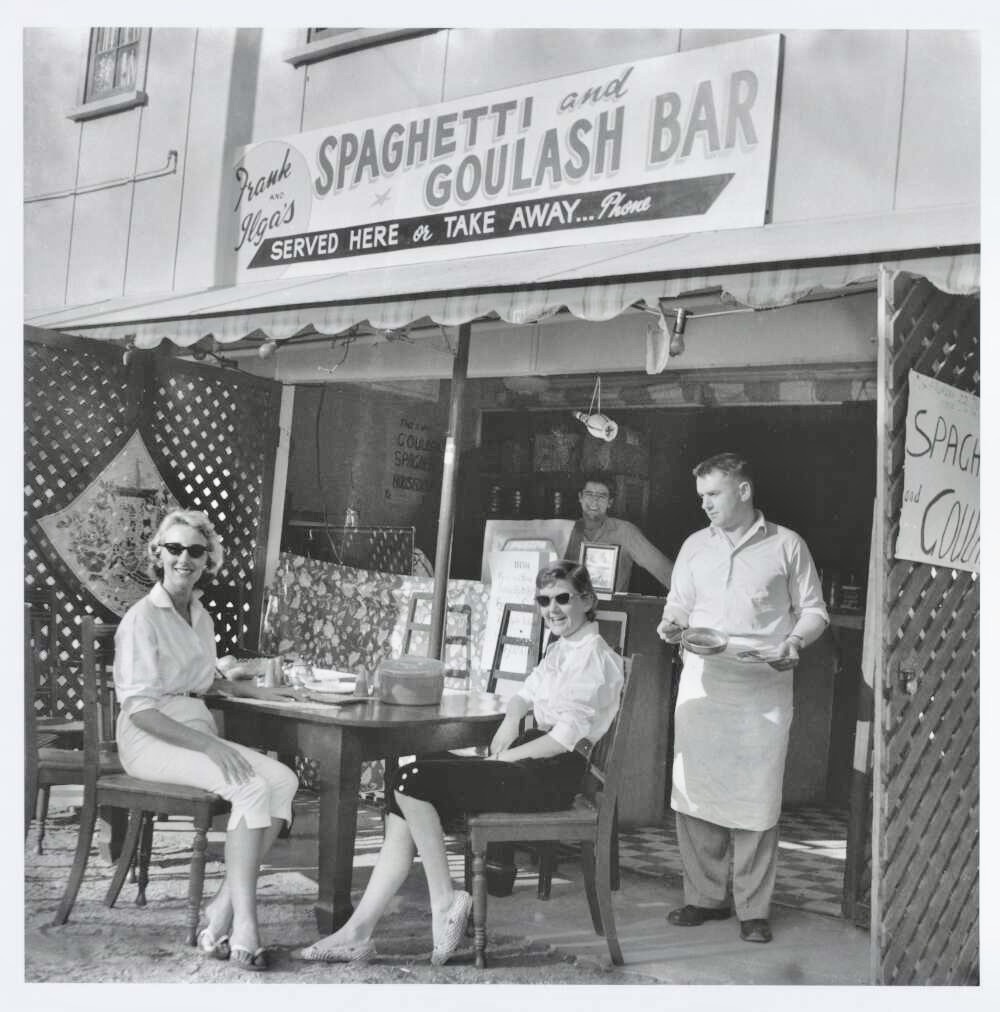
Outdoor eating at Frank and Ilga’s Spaghetti and Goulash Bar, Gold Coast, Queensland, circa 1950s.
Photo by Jeff Carter

Eating in solidarity

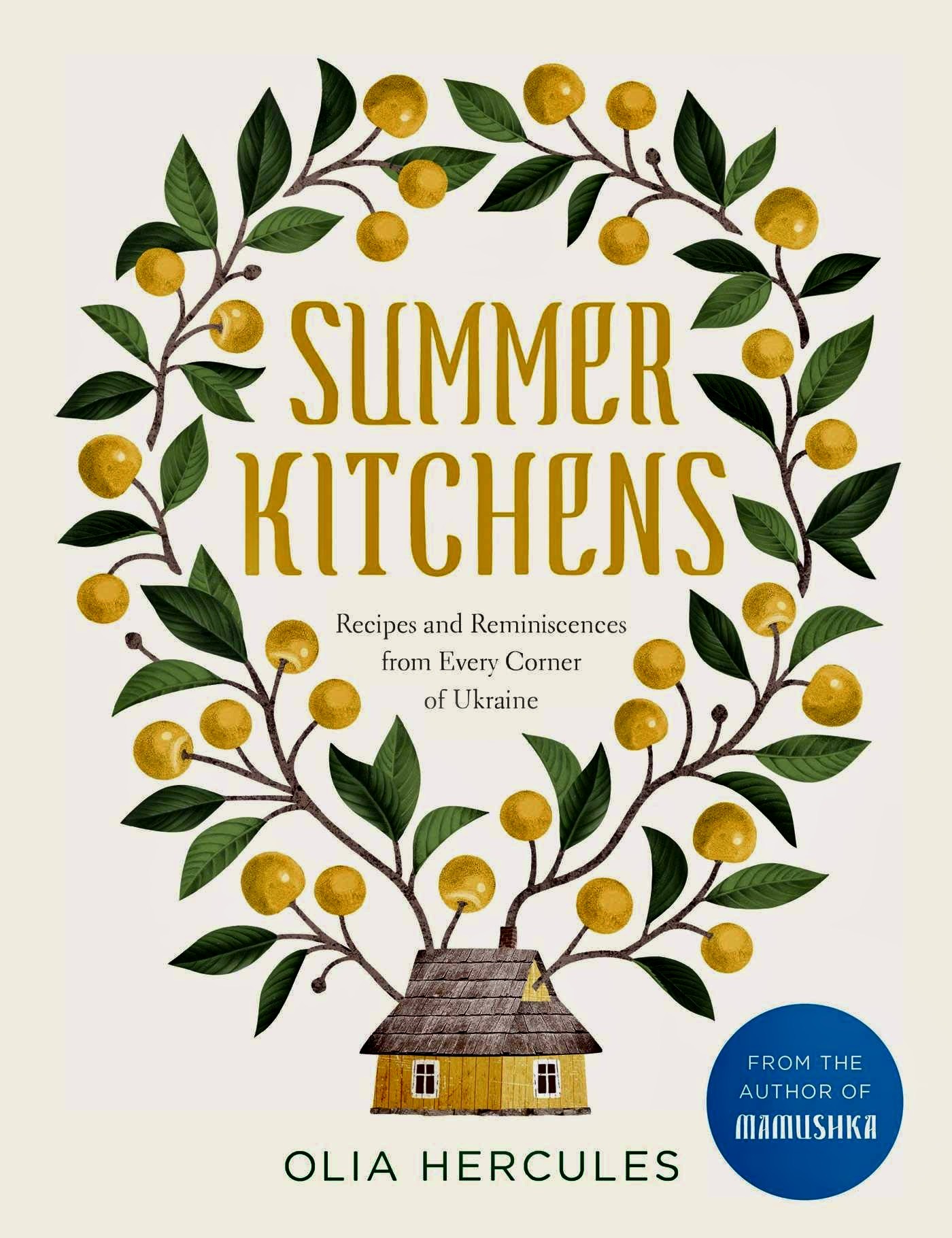
Our screens are awash with footage of Ukrainians made suddenly  homeless, and we’re mourning this senseless disruption and destruction of human life. I’m in awe of the Ukrainians’ resilience and determination to defend their country. And I’m inspired by food writer Olia Hercules, not only the project she’s launched to raise funds for her besieged homeland, but also her 2020 book Summer Kitchens: Recipes and Reminiscences from every Corner of Ukraine. It reminds us that to live is to plant and harvest and cook and eat, that history lives in kitchens and markets and on bakery shelves, even as Putin’s artillery would reduce them to rubble.

Ukrainian food is more than borscht. More than chicken Kiev, a dish strongly associated with Ukraine but which is, I think, an early twentieth-century creation. In any case, whatever its origin story, let’s now call it chicken Kyiv. Sometime after 2018 Kiev became Kyiv. Reclaiming the city’s original name was a desire by Ukraine to disentangle itself from its Soviet past and assert an independent identity away from the shadow of Russian dominance.

Ukrainian cuisine is rustic, is home-cooking, is sour and honey-sweet, is dumplings and mushrooms, is cabbage stuffed, is hearty and earthy and profoundly grainy. Buckwheat, rye, potatoes, beetroot and berries. There’s an obvious overlap with Polish cooking, but at the Ukrainian table you’ll also find echoes of Jewish culinary practices. As well as tastes from Turkey, Hungary and other Slavic and Central European countries.

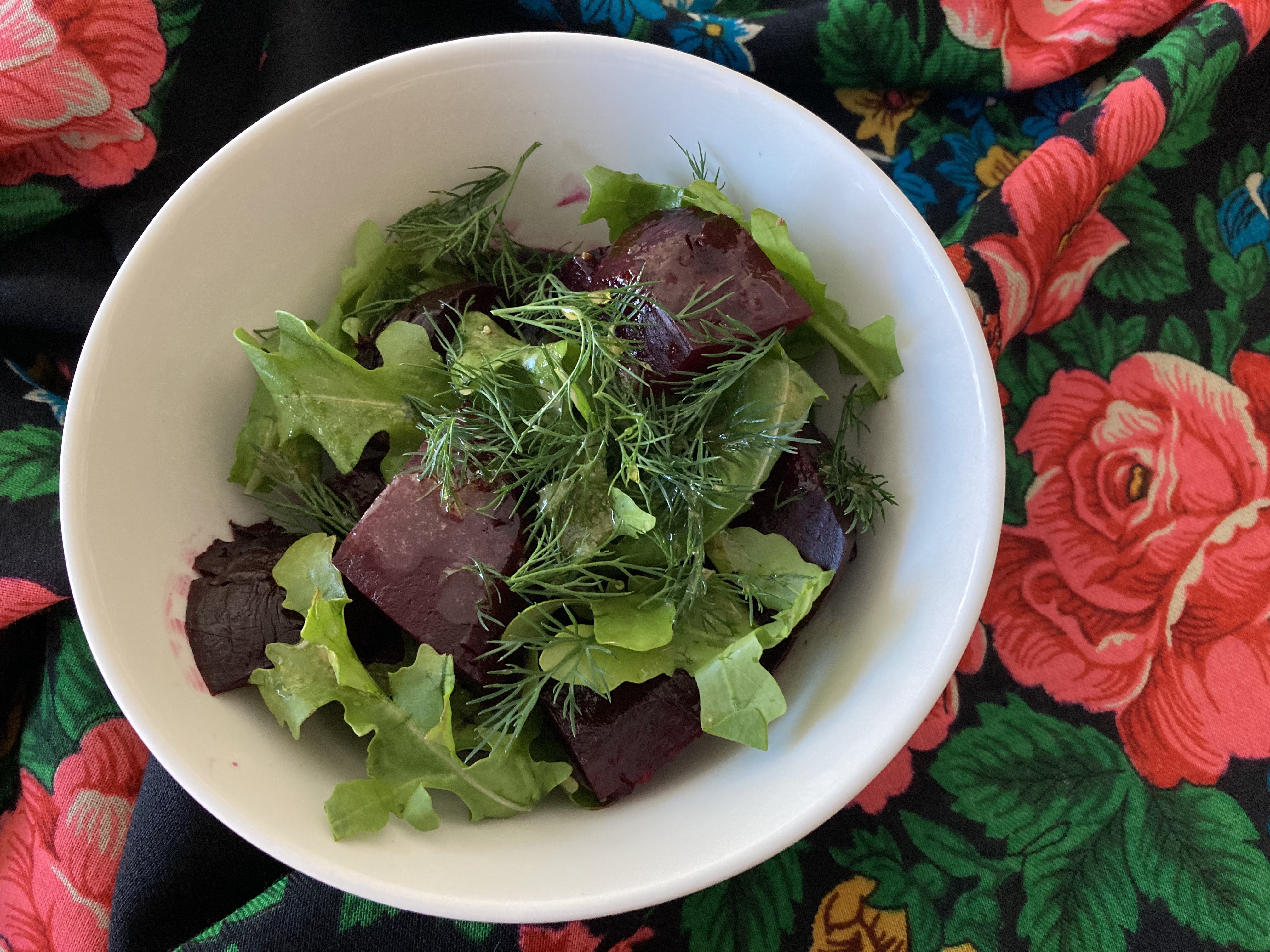
In solidarity with the people of Ukraine, last night’s dinner featured—amongst other things—potatoes, pickled cucumber and a beetroot salad with rocket, dill and a mustardy olive oil dressing.

I’m going to end this post with a few lines from Evenings on a Farm Near Dikanka by Nikolai Gogol, published in 1831 – 32. Gogol grew up in Ukraine and the stories in Evenings on a Farm Near Dikanka draw on his childhood memories.

… the same table on which they had left vodka when they went out to dinner was now, as though by some magical transformation, covered with little saucers of jam of various sorts and dishes of cherries and different kinds of melons … the old lady became more disposed to talk and, of her own accord, without being asked, revealed a great many secrets in regard to the making of apple cheese, and the drying of pears …
   But Ivan Ivanovich was more talkative and active than any­one else. Feeling secure that no one would snub or contradict him, he talked of cucumbers and of planting potatoes and of how much more sensible people were in old days.
From ‘The Dinner’, in Evenings on a Farm Near Dikanka, Foreign Languages Publishing House, Moscow. Translator uncredited.

PS. After receiving an official request for assistance from the Government of Ukraine, the World Food Programme has launched an emergency operation to provide food assistance for people fleeing the conflict. To donate click here.

’tis the season for … fruitcakes

Another strange and constrained year draws to a close. Another slice of fruitcake. And another dive into the history of dried fruits in Australia. In connection with a project I’ll be doing in the latter part of 2022, I did some research into the relationship between migration and the dried fruit industry.

A 1922 newspaper explained that the South Australian Premier, Henry Barwell, was brokering a deal—or perhaps more accurately, a swap—with the British government for an ‘immigration settlement along the Murray Valley as a substantial quid pro quo for an Imperial preference for Australian fruits’. You buy our dried fruit, we’ll take your immigrants. It’s tempting to point out that a century later, Australian politicians’ international diplomacy skills have not greatly improved.

Stollen, Christmas cake, Dundee cake, sultana cake, golden fruitcake, simnel cake, Caribbean black cake … I’ve yet to meet a fruitcake I don’t like. I totally don’t understand the American antipathy to fruitcake—but then I don’t share their fondness for the sugary blandness that is red velvet cake.

Recipes for Christmas cakes get passed around in families and communities. Get modified over the years to fit the tastes and lifestyles of successive generations. We have my partner’s grandmother’s recipe, copied out in spidery handwriting on blue paper, blurred by buttery fingerprints and with a pencil X beside ‘figs’. (Neither of us much like figs so we replace them with dates.) A recent article in the Sydney Morning Herald asked if baking your own Christmas cakes (and Christmas puddings) was a dying art. Are we over the Covid-fuelled home-bakathon?

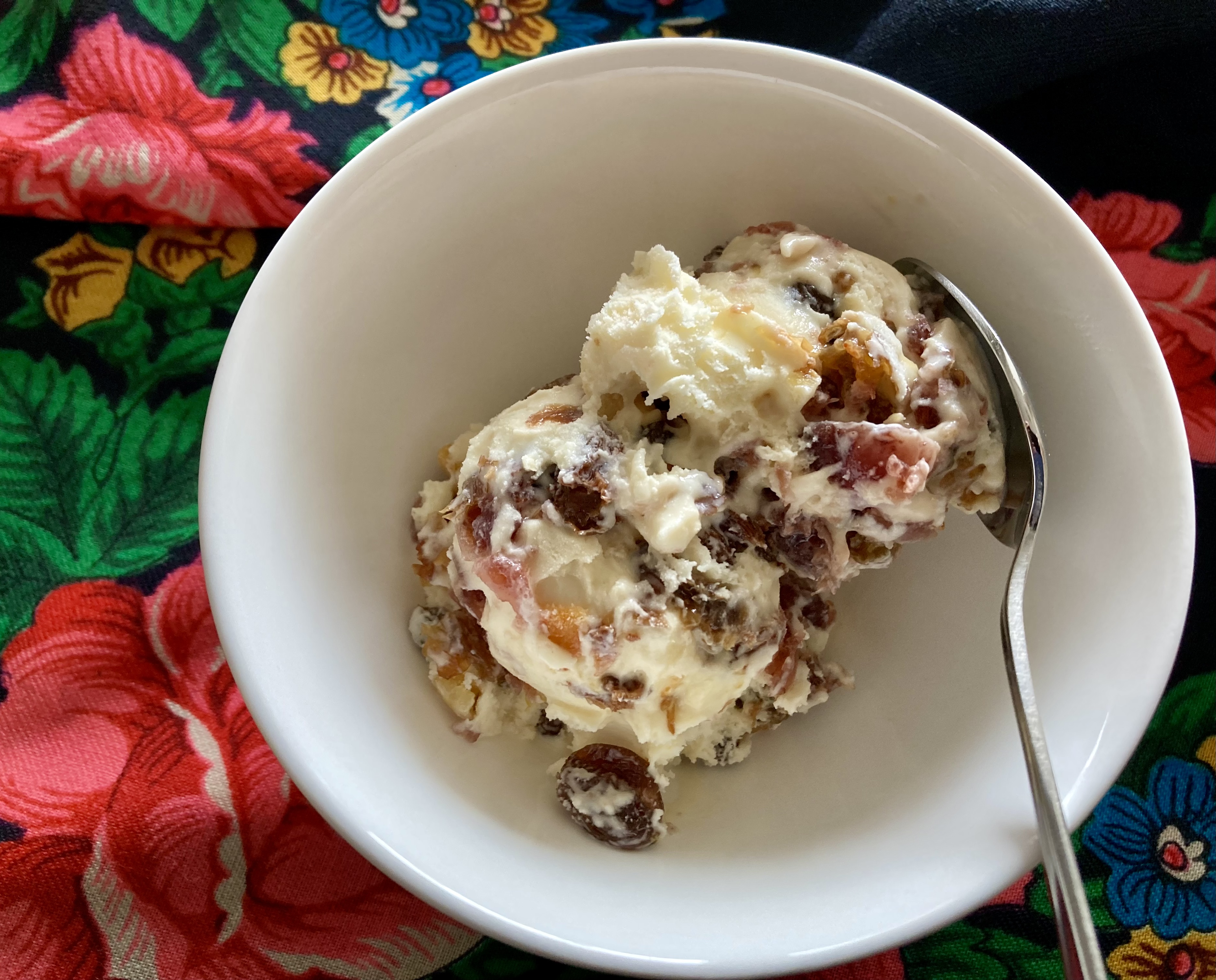
This year I composed my own adaptation for our Christmas dessert: fruitcake ice cream. I soaked sultanas, raisins and dried citrus peel in hot tea for a few hours to soften and plump up. Then I drained them, added glacé cherries to the bowl and soaked the whole lot overnight in brandy. The following day I partially melted a tub of good quality vanilla ice cream, mixed in the dried fruits and put it back in the freezer.

Although I didn’t make a traditional cake, our friend Iqbal did, and he gave us a present of his dark, rich, delicious Christmas fruitcake, along with a Sri Lankan love cake.

Back to the history of dried fruit cultivation.

The Australian Dried Fruits Association (now Dried Fruits Australia) was formed in 1907 from the amalgamation of the Mildura Raisin Trust and the Renmark Raisin Trust. The aim of the organisation was to protect the interests of growers, regulate prices and promote their produce.

This excerpt comes from a Victorian newspaper in 1932.

‘In the Palais Theatre last Friday afternoon over 300 people were treated to a most instructive and enjoyable two hours’ entertainment … Moving pictures were screened depicting the work that goes on in the irrigation areas where dried fruits are grown, processed and packed … Comedies and other pictures of educational interest were shown and everyone was given a Sunshine Cookery Book.

The article continues: ‘The objective is to stimulate interest in, and increase sales of, Australian sultanas, currants, lexias, apricots, peaches, pears and nectarines … Besides the necessity of supporting a great national industry on the grounds of patriotism and sound common sense there is one very convincing reason why every housewife in Australia should make it their duty to embody dried fruits in some shape or form in the daily diet of the home. It is a question of health.’

The early dried fruit industry in Australia drew on the expertise of Greek migrants. In 1948 The Age announced that ‘Migrants from displaced persons camps in Europe will help to save the dried fruit crops in Victoria and South Australia. Mr Calwell, Immigration Minister, said today that 400 men travelling in the General Stewart, due to reach Australia next month, would be taken immediately to the Victorian and South Australian irrigation areas on the River Murray … To supplement this force, 200 Balts [sic] now at Bonegilla camp would be sent to Mildura.’

Where do most of the fruits in fruitcake originate? The Arab world. Where did the art of mixing dried fruit into cake batter begin? In Europe, starting in ancient Rome. Proof—if you need it—that fruitcakes are life-affirming and cosmopolitan.

 

This sugar business

After the lull and languishing of lockdown, November has been a busy month. I have an audio work in production (Mrs C Private Detective), a theatre show opening early 2022 (The End of Winter) and I’ve started research / creative development on a new piece (Flying Saucers Over Fairfield.) So this month’s post is a short one.

Sugar gets a heap of bad press, but I have a soft spot it it—well, for its history. Perhaps because it was an important crop in Australia. Perhaps because I live in an apartment on the (redeveloped) site of the old Pyrmont CSR refinery …

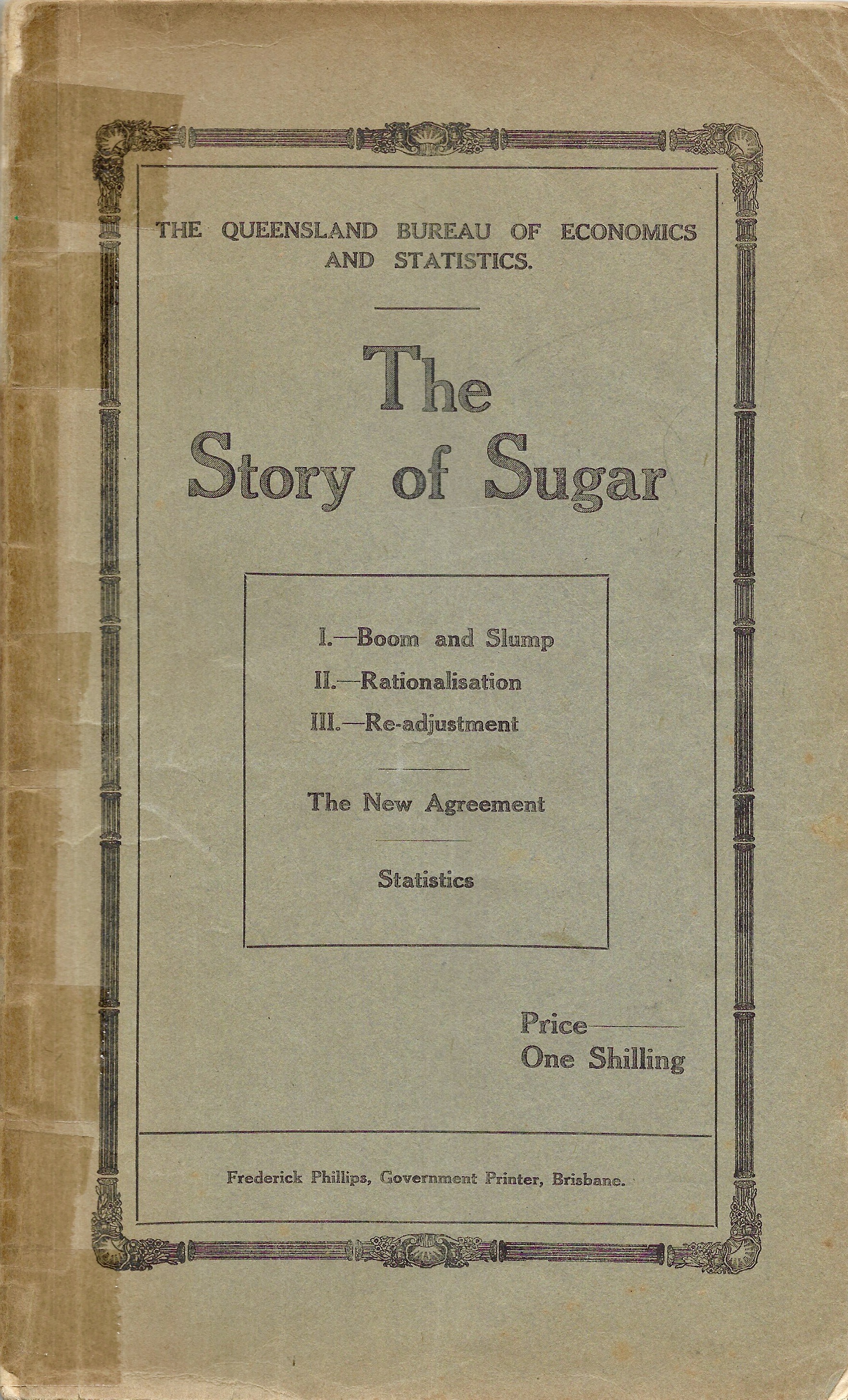
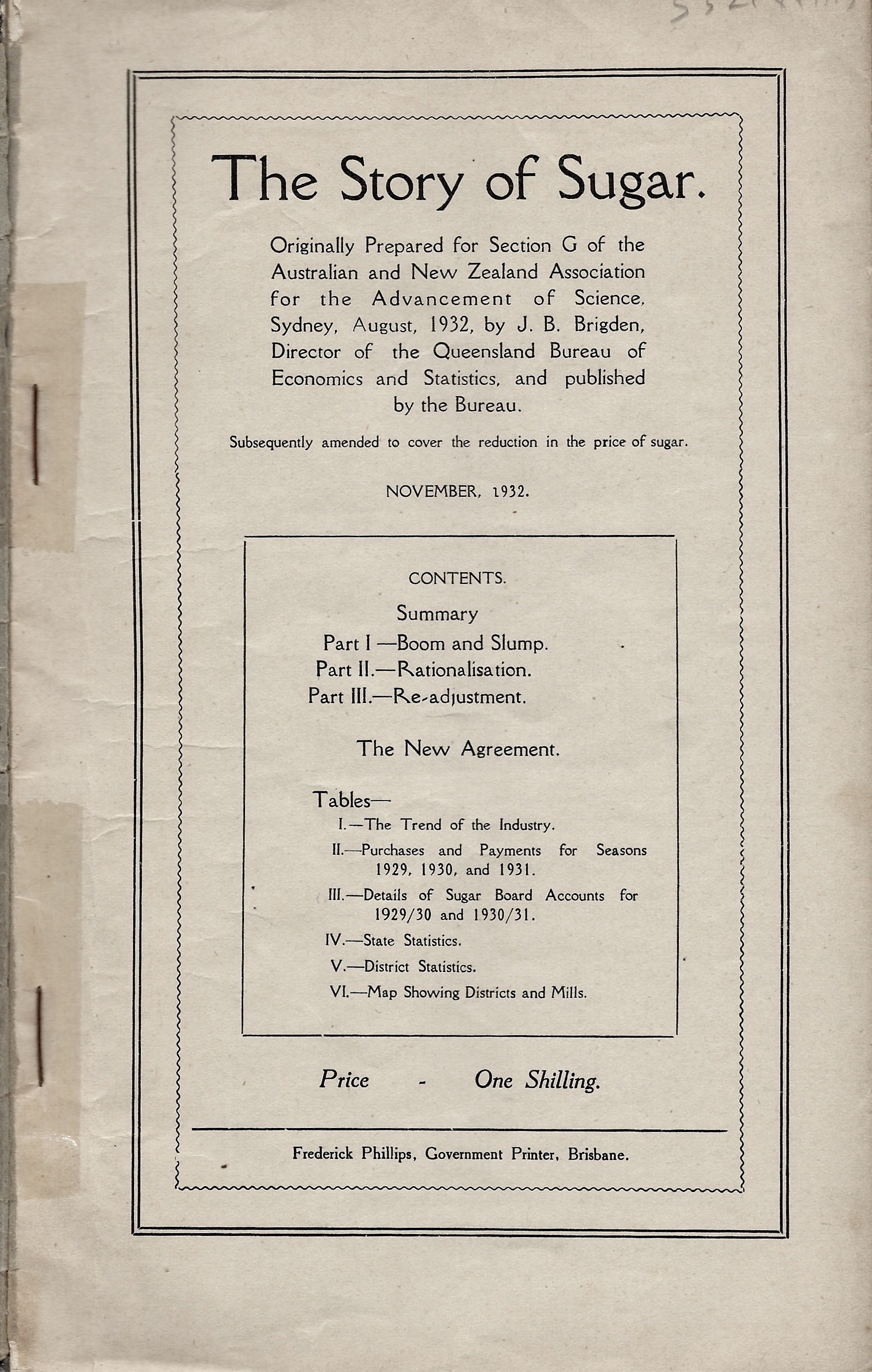
I picked up The Story of Sugar, published in 1932 by the Queensland Bureau of Economics and Statistics, in a Brisbane charity shop. The booklet starts with a Summary:

‘The Australian sugar problem is part of the world’s sugar problem and has much the same origin. It is a problem of over-production and of sales on the world’s market at much less than the sugar costs to produce.’

Now of course, if you talk about the ‘sugar problem’ you’re likely to be talking about consumption rather than production, about diet and public health, about sugar as the villain in the pantry.

I bought The Story of Sugar for the bits and pieces of historical information it contains. And when I flick through the booklet’s yellowed pages, I gloss over the tables and economic data, and picture instead the cane fields of north Queensland ablaze.

Fire runs through the history of sugar. ‘By a fire at Pyrmont this morning the refined sugar store of the Colonial Sugar Refining Company was destroyed.’ That’s where I live, and that report is from an October 1918 Sydney newspaper. ‘The fire was remarkable for the velocity with which it spread and for the magnificently picturesque spectacle it provided. It was the biggest fire that Sydney has had for years.’ The account continues:

‘Immense geysers of flame shot into the air, and then after the fashion of a rocket, broke into myriads of sparks and spray. There was not a puff of wind. The flames leapt directly upward, illuminating the sky for miles, and casting brilliant reflections into the water. The walls burst with explosions which were heard a long distance off. From the effect of the breaking geysers, the moon was coloured a beautiful dark blue, and the stars above and around it were paled and surrounded with reddish and blue tints. The atmosphere was permeated with the odour of burnt sugar.’

I suspect I’ll be returning to this sugar business at some point, but that’s it for now.

Go pine nuts

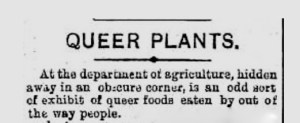
There they were in Queer Plants, an 1894 article in a weekly newspaper from regional Victoria.

The article continues: ‘ … in California the … Indians collect pine nuts, which are the seeds of certain species of pine, sometimes called “pinions,” by kindling fires against the trees, thus causing the nuts to fall out of the cones’.

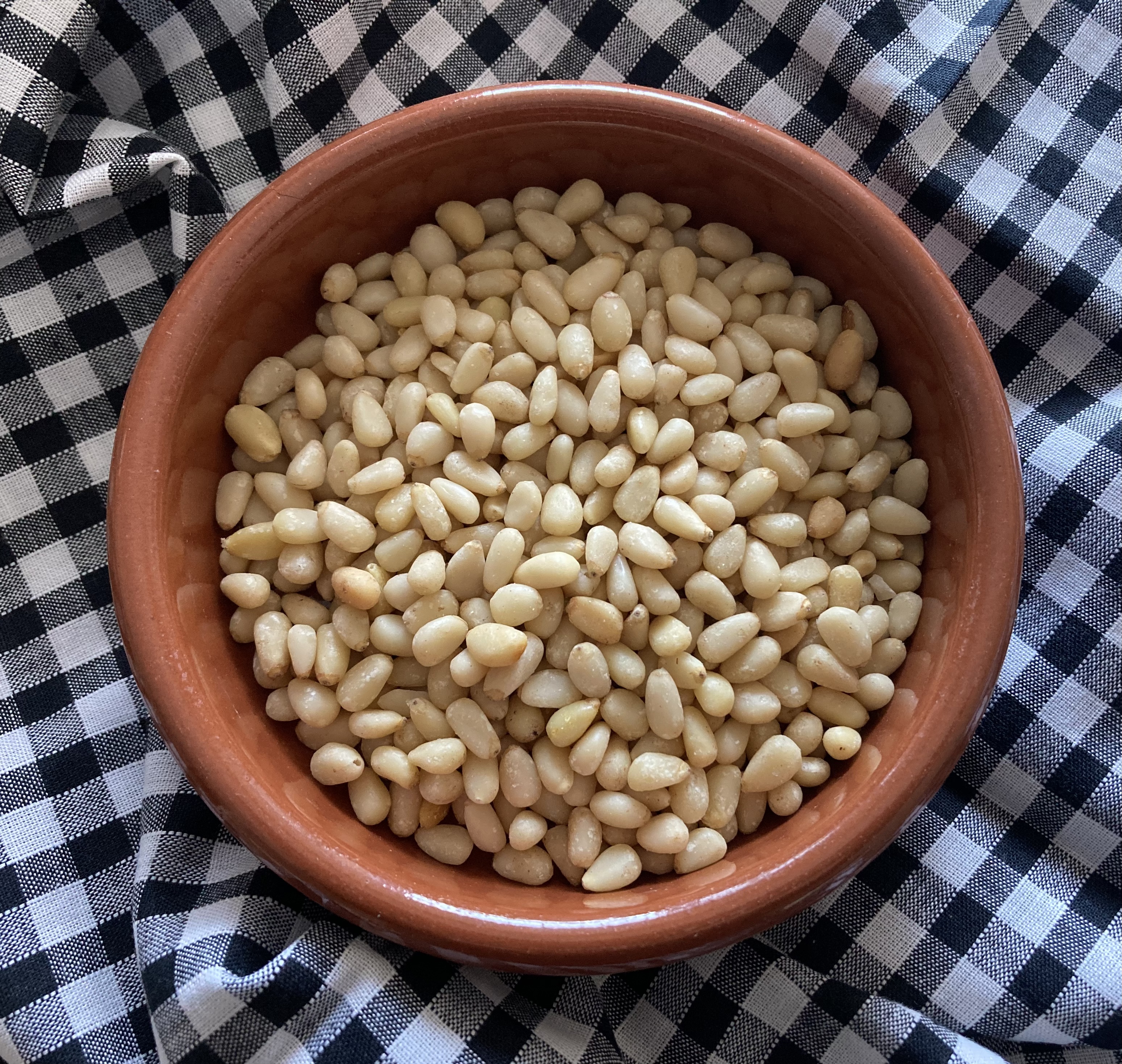
Pine nuts aren’t nuts, botanically speaking. They’re the edible seeds of those pine species (genus Pinus) whose seeds are large enough to be worth harvesting. European pine nuts come mostly from the stone pine (Pinus pinea), which has a super-long history of cultivation, and an even longer one of gathering from the wild. Russia, Korea, China and—once upon a time, Afghanistan—are major producers of pine nuts. I checked out the pine nuts for sale in my local supermarket, and they’re all, including those labelled ‘organic’, imported from China.

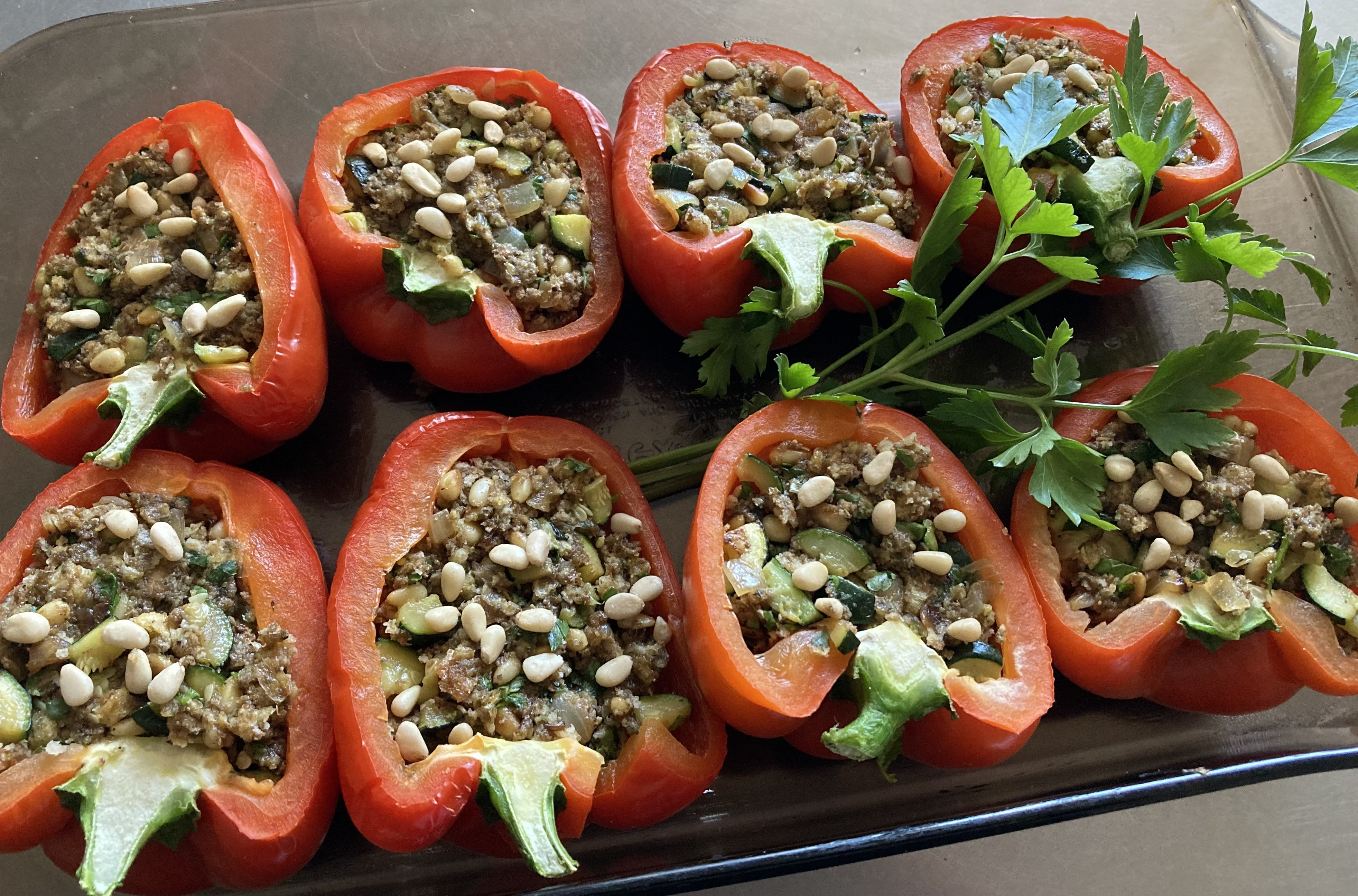
Many cuisines—European, Asian, Middle Eastern—make use of pine nuts. They enliven green salads; you can use them instead of almonds in a Spanish romesco sauce; they add a bit of crunch to pilaf and other rice dishes. And you can use them to stuff mushrooms, tomatoes, marrows—or capsicums, which is what I’m doing today.

There’s more to the pine nut than the classic pesto alla Genovese. But in a sobering 2015 article in the New York Times, Jonathan C  Slaght suggests the pine nut industry may be contributing to the crash of an ecosystem in the Russian far east. Commercial over-harvesting by Homo sapiens along with myriad disruptions caused by climate change is depriving other species of their vital food source.

Pine nuts are rich in oil and the smell of them toasting is irresistible. I always add an extra handful to the pan—and enjoy snacking on them as I put the recipe together. Pine kernels have a short shelf life—that’s my justification for this indulgence.

In the kitchen I toast my pine nuts over a low heat. Mix them with (dark rye) breadcrumbs, parsley, thyme, salt, black pepper and a teaspoon of za’atar. Then add the finely chopped onion, garlic and zucchini that I’ve fried in olive oil. I bind the stuffing with a beaten egg, but you could leave it out and use olive oil instead if you want to make your dish vegan. I blanche the capsicums or give them a minute in the microwave to start the softening process. Once filled, they’re ready to go in the oven on a medium heat for about half an hour.

Pine nuts connect us to a world of remote villages and vast coniferous forests, to the world of fairytales and ancient foraging traditions. I’ve always liked the stark beauty of those northern forestscapes, with their understories of fungi, foxes and misfit children. While in Australia, in places like Oberon and surrounds, we’ve got acres of plantation pines—an environment I find unsettling, slightly spooky even. All those fish-bony firs, all those trees in straight lines …