Of course it happened in the small hours of Friday morning. Of course it happened not only in summer, but during a mini heatwave. Our fridge stopped working. I discovered this about 8:00 am when I went to add ice cubes to my water bottle and found the tray awash and the freezer contents squishy.
The fridge was old. Over the years a few bits snapped off and it acquired the odd small crack, but it was such a reliable workhorse. We knew its days were numbered, we knew we’d need to replace it sooner rather than later. But still.
I bought the new fridge online. Where we buy everything these days. The earliest it could be delivered was Tuesday. It was Friday now—that meant four days without refrigeration. Not ideal, but we’d manage … wouldn’t we? After all millions of people in many parts of the world don’t have access to cold storage.
The world’s first ice-making machine was invented in the 1850s by James Harrison, a Scottish-born Australian. A process with huge implications for food, medicine and science. ‘Ice within the tropics will soon be looked upon as a necessary of life,’ ran a report in the Illustrated London News in 1858.
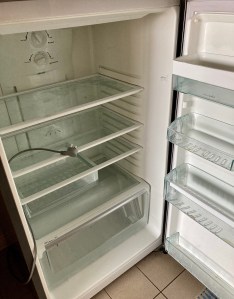 Our sad old fridge
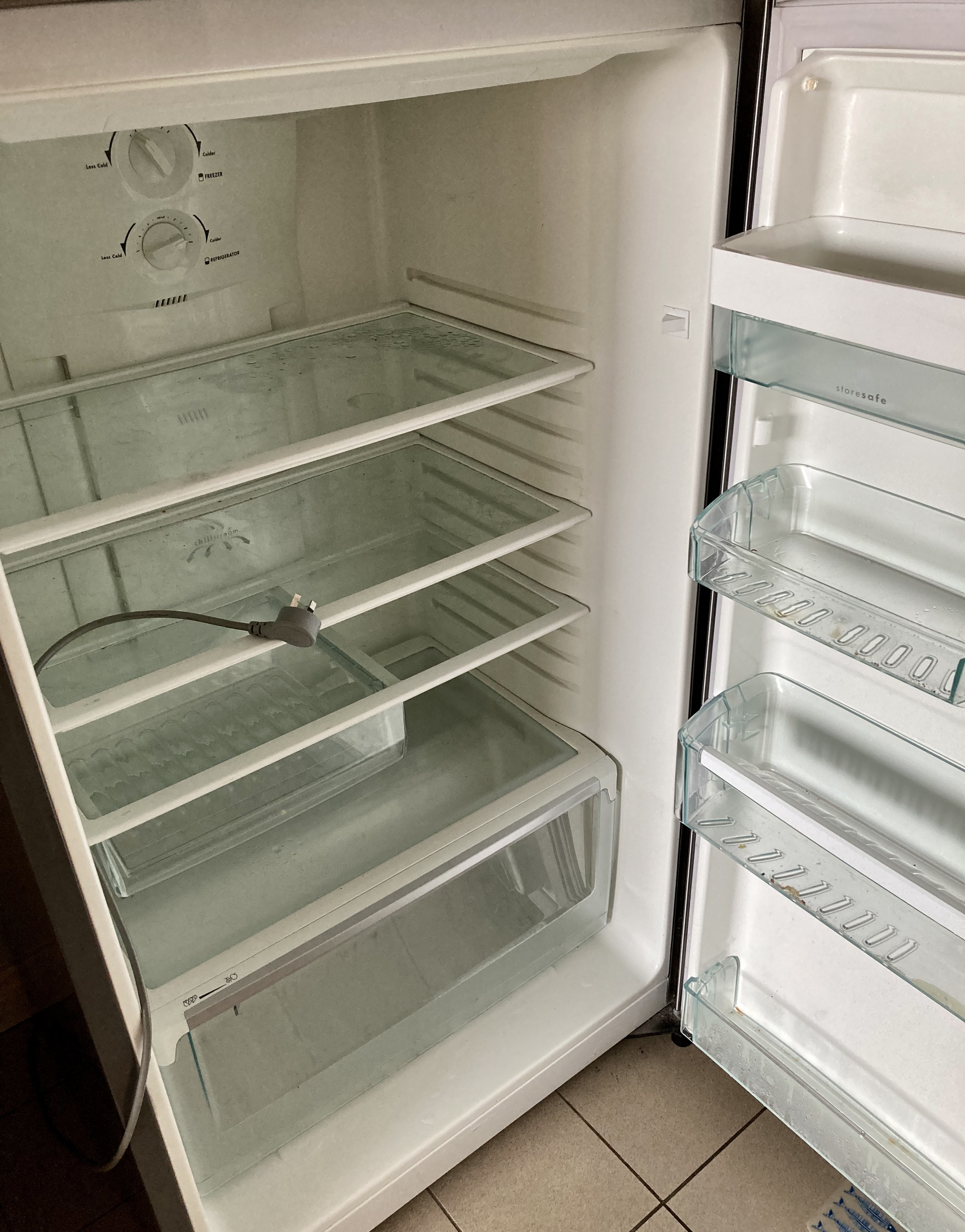
Nothing in the defrosting freezer compartment was salvageable. I cleared it out. As for the fridge, by Friday afternoon the butter was runny, the cheese soft, the beer warm and the yoghurt on the turn. Anything unopened was kept, everything else went in the garbage; I shuddered to see all that food waste.
What I was unprepared for was how unsettling it was without a functioning fridge—and how much it disrupted our routines. We had to think through and plan not just meals, but every snack and every cup of tea. Without any means of cool storage we had to buy what we wanted to eat when we wanted to eat it. The milk we bought for breakfast had to be tipped down the sink after a couple of hours. I couldn’t make a cheese and tomato toastie unless I threw out the ingredients I’d just bought once I’d eaten it. It was a hot, incredibly humid weekend and in the end, we went out for dinner, we ate a lot of sushi, and the whole experience has prompted me to start re-reading Elizabeth David’s Harvest of the Cold Months The Social History of Ice and Ices.
The new fridge arrived yesterday. Yay! The delivery guys took away the old one. Hopefully parts of it will get recycled. At the bottom of a cupboard I found the original receipt—we’d bought our old model fourteen years ago almost to the day.
One last detail. If you’re interested in the history of refrigeration (I am) check out Frostbite: How Refrigeration Changed Our Food, Our Planet, and Ourselves by Nicola Twilley.
 Eat The Table